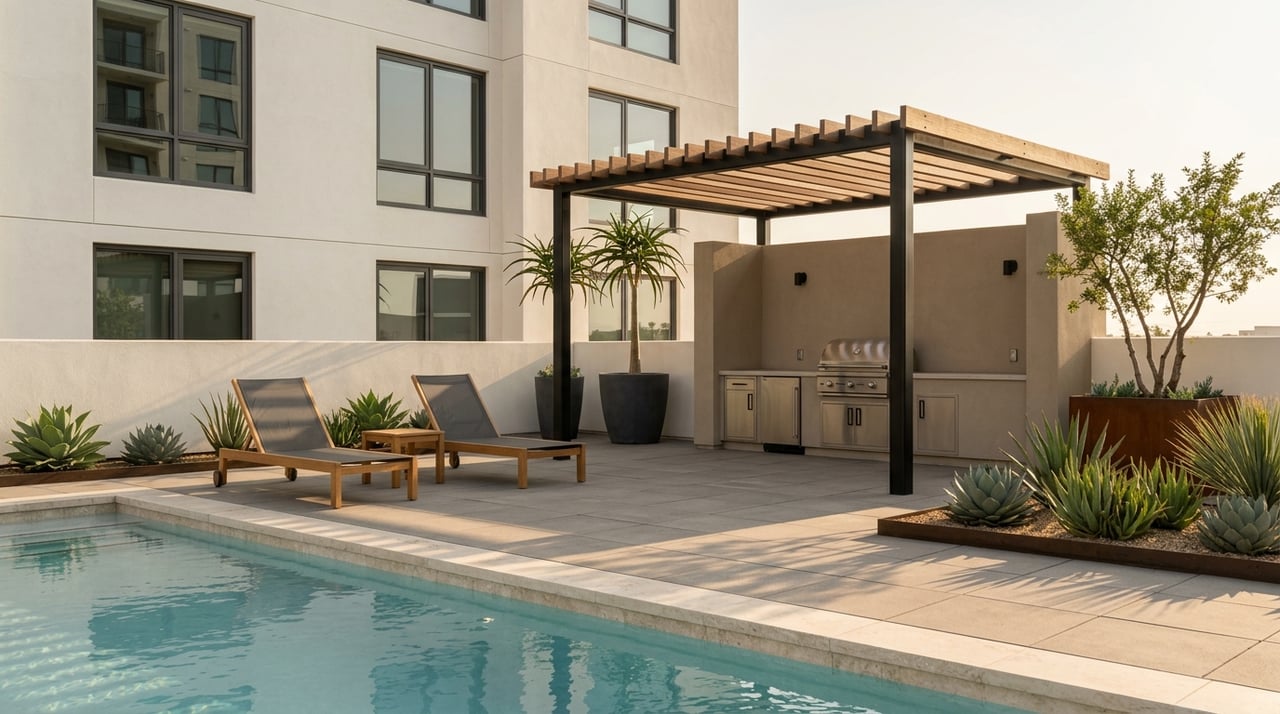
High-Rise Living In Midtown Phoenix’s Arts And Dining Core
If you want a home that puts museums, dining, and light rail within easy reach, Midtown Phoenix deserves a serious look. This part of Central Phoenix offers a distinctly urban lifestyle where condo towers, historic neighborhood fabric, cultural destinations, and everyday conveniences sit close together. For buyers who value efficiency, walkability, and a low-maintenance home base, high-rise living here can feel like a smart fit. Let’s take a closer look at what makes Midtown’s arts and dining core stand out.
Midtown Phoenix is often defined by its Central Avenue corridor. According to the Midtown Neighborhood Association, the area is shaped by a work, live, play identity, with partnerships tied to light rail and museums. The same organization also notes that Phoenix Towers helped introduce high-rise living to the Valley, while Central Avenue played an important role in the area’s museum and retail identity.
That mix gives Midtown a layered feel. You are not looking at a single-use district or an isolated cluster of towers. Instead, you get an urban corridor where residential buildings, cultural landmarks, and mixed-use redevelopment come together in a way that supports day-to-day convenience.
One of Midtown’s biggest lifestyle advantages is how close you are to major cultural destinations. If you enjoy having museums, libraries, and public spaces as part of your routine, this area offers a strong case for condo living.
The Phoenix Art Museum at 1625 N. Central Ave. says its main entrance is about a quarter mile north of the McDowell/Central light rail station. The museum also describes itself as walkable from Downtown, Roosevelt Row, and nearby Central Phoenix parks and library destinations, which reinforces how connected this part of Midtown feels.
The Heard Museum at 2301 N. Central Ave. is another key destination along the corridor. It sits four blocks north of McDowell Road on Central Avenue, making it a convenient stop for residents who want arts and culture close to home.
Margaret T. Hance Park expands that cultural reach even further. The City of Phoenix notes that the park connects several destinations, including the Japanese Friendship Garden, Irish Cultural Center and McClelland Irish Library, Phoenix Center for the Arts, and Burton Barr Central Library.
Even the transit experience ties into the arts. Valley Metro’s Artsline places public art at several Central Avenue stations that serve Midtown, including Osborn/Central, Thomas/Central, Encanto/Central, and McDowell/Central. For many residents, that helps make daily movement through the neighborhood feel more interesting and place-specific.
For many buyers, lifestyle is not just about where you sleep. It is also about where you can meet friends, grab dinner, or make a quick stop on the way home. Midtown benefits from Central Avenue’s role as a dining spine that links a range of restaurant and bar options.
Visit Phoenix describes a food trail running along Central Avenue from Midtown to Uptown. It highlights destinations including FEZ, Switch, The Wild Thaiger, Clever Koi, Pane Bianco, Postino, Joyride Taco House, Federal Pizza, Windsor, and Churn. That pattern gives the corridor a more connected, stop-by-stop feel rather than the sense of a single isolated retail center.
Park Central adds to that convenience. Its official site emphasizes redevelopment paired with retail, restaurants, and transit access, along with proximity to major freeways, nearby neighborhoods, and two light rail stations. For residents, that means Midtown can function as both a home address and a practical place to handle everyday errands.
Transit access is a major part of Midtown’s high-rise appeal. Valley Metro Rail currently operates as a two-line system across 35 miles and 49 stations, with service 365 days a year, more than 20 hours a day, and 12-minute peak frequency during peak hours.
For Midtown residents, the station network along Central Avenue is especially important. Stops include Central Ave/Camelback, Indian School/Central, Osborn/Central, Thomas/Central, Encanto/Central, and McDowell/Central. Valley Metro also connects McDowell/Central directly to Phoenix Art Museum, and Burton Barr Central Library sits across the street from that station.
This setup supports a more flexible routine. Valley Metro describes transit-oriented communities as people-scale places designed to support walking and cycling. Midtown’s corridor aligns well with that idea because housing, dining, museums, and transit stops sit close together.
High-rise living in Midtown often comes down to convenience. Buyers who choose this lifestyle are often looking for a home that is easier to maintain and better connected to the city around it.
The Midtown Neighborhood Association even shares a resident perspective that values Midtown in part for its lock-and-leave lifestyle and proximity to light rail. That phrase matters because it captures what many condo buyers want: a home base that feels secure, simple, and efficient.
In practical terms, high-rise and condo living in this part of Phoenix often means shared amenities, managed common areas, and a reduced list of exterior upkeep responsibilities. If you travel often, split time between cities, or simply want less maintenance than a traditional detached home, Midtown can make a strong case.
Amenity packages can vary by building, but Midtown towers often attract attention for features that support comfort and convenience. A useful example is Crystal Point Condominiums, whose public materials describe daytime concierge service, 24-hour door reception and security, an owners’ lounge with a catering kitchen, a heated lap pool and spa, a 24/7 fitness center, underground parking, package handling features, and a private dog run.
The same building also highlights balconies, views, and resort-style landscaping. Those details help illustrate what many buyers associate with higher-density urban living in central Phoenix. While every building is different, the general appeal often includes a blend of services, shared amenities, and a more streamlined day-to-day ownership experience.
Midtown’s high-rise lifestyle tends to work best for buyers who prioritize access over excess space. If you want to be near dining, cultural destinations, and transit, you may find more value here than in a home centered on yard space or a larger footprint.
This kind of setup can also appeal if you want a city base that supports frequent travel or a simpler routine. The broader theme is lifestyle efficiency. You are choosing a home that can place more of your day within easy reach.
Before you focus on a specific unit, it helps to think about how you want to live in Midtown. Not every high-rise offers the same feel, and not every part of the corridor puts the same destinations at your doorstep.
As you compare options, consider:
These factors can shape your experience just as much as square footage or finishes. In Midtown, location within the corridor often plays a big role in how connected your home feels.
If you are exploring high-rise living in Midtown Phoenix or comparing it with nearby luxury condo options in Central Phoenix, working with a team that understands neighborhood-level differences can help you narrow the field quickly. For tailored guidance on Midtown, the Biltmore area, and nearby luxury residential opportunities, connect with The Phil Tibi Group.
Our personal touch and transparency are how we plan to make you feel comfortable at every step of the home buying or selling process. We’re proud of our team and we try and show them off whenever we can. Contact us today so he can guide you through the buying and selling process.