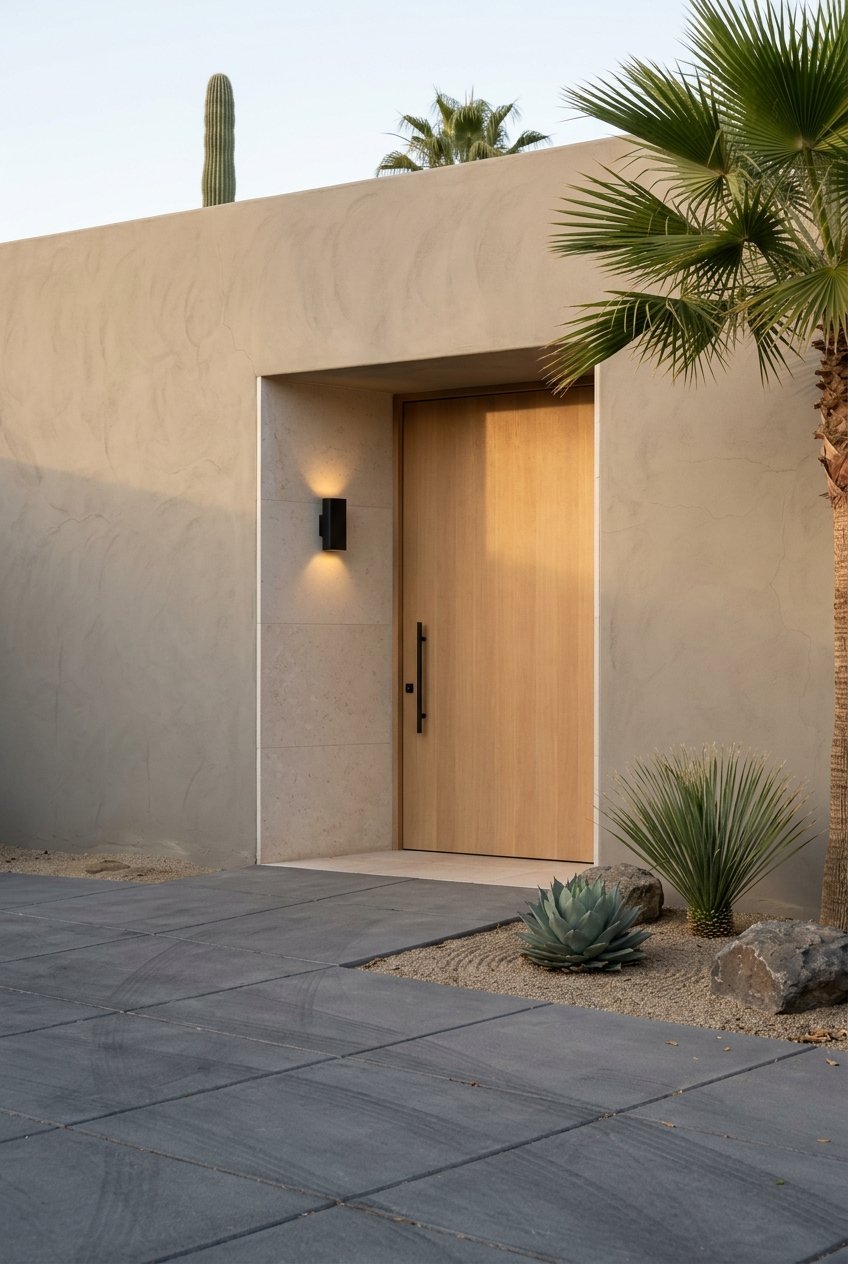
How a Discreet Home Sale Works in Paradise Valley
Selling a luxury estate quietly in Paradise Valley can sound simple, but the right kind of discretion takes planning. You may want fewer showings, less public exposure, and more control over who sees your home, especially in a market where privacy is part of the appeal. At the same time, you still need a strategy that protects your pricing, follows Arizona rules, and keeps your options open. Let’s dive in.
Paradise Valley has long been known for its residential character and emphasis on space and privacy. The town describes itself as predominantly single-family, and its land-use framework centers on preserving a primarily one-acre residential setting. That quiet, low-density environment is one reason many sellers naturally lean toward a more private sales approach.
For luxury buyers, privacy is not just a nice feature. Current luxury-market research shows that security, exclusivity, and secluded settings remain high priorities in 2026. In a place like Paradise Valley, that means a discreet launch can align well with what many qualified buyers already value.
A discreet sale does not mean avoiding the rules or keeping key facts hidden. It means choosing a listing strategy that limits public exposure while staying compliant with ARMLS requirements and Arizona disclosure obligations. The goal is controlled marketing, not informal marketing.
In practice, most discreet sales fall into one of three paths:
Each option offers a different balance of privacy, exposure, and speed.
If you want a quieter sale, the first decision is usually whether you want total public silence or limited early exposure. That choice matters because ARMLS treats these options very differently.
An office exclusive listing is an exempt listing that is not distributed through the MLS and is not publicly marketed. Under ARMLS rules, the seller signs a disclosure acknowledging that they are waiving the benefits of the MLS and public marketing. In this setup, buyers may be found directly through the listing firm.
This route offers the highest level of privacy. It can reduce public visibility, keep photos off major consumer sites, and limit the number of people who know the home is available.
The trade-off is reach. By waiving MLS exposure, you are also waiving access to the broadest pool of buyers that public marketing can provide.
A Coming Soon listing can offer a middle ground. ARMLS allows a listing to remain in Coming Soon status for up to 30 days, and during that time it is visible to MLS subscribers but does not appear in IDX feeds or on syndication sites such as Realtor.com or Homes.com. Showings can occur at the seller’s discretion.
This option gives you more control than a full public launch while still keeping the listing inside a compliant MLS framework. ARMLS also treats Coming Soon as satisfying Clear Cooperation requirements, which makes it a practical option for sellers who want privacy without fully stepping away from MLS participation.
Another benefit is timing. Days on market do not begin until the listing becomes Active, which can help you test early interest before a broader push.
This is one of the most important points in a discreet sale. In ARMLS, true private sharing stays within the listing brokerage. Once a listing is shared with brokers or licensees outside that brokerage, ARMLS treats that as public advertising or display for Clear Cooperation purposes.
That means a seller should be very clear about what “private network” really means. If the property is moving beyond the listing brokerage, the rules can change quickly, and the listing may need to be entered into the MLS within one business day if it is publicly marketed.
For you, this is less about technical policy and more about control. A discreet strategy only works when everyone agrees in advance on who can see the property, how it will be shared, and when the next phase begins.
A private or delayed launch can absolutely make sense in Paradise Valley. It can reduce disruption, protect your schedule, and keep the sale from becoming a public event. For many estate sellers, that level of control is a meaningful advantage.
Still, privacy does not replace market discipline. Recent market data shows Paradise Valley remains a high-value market, but also a selective one. Redfin reported a May 2026 median sale price of about $4.45 million and 91 median days on market over the prior three months, while Zillow showed an average home value of about $3.52 million, 213 active listings, and a 0.963 median sale-to-list ratio in late May 2026.
These are different measures, but together they point to the same conclusion: pricing precision matters. In a market with meaningful inventory and careful buyers, a discreet launch should still include a clear plan for evaluating price and response.
One of the smartest ways to sell discreetly is to decide in advance what success looks like. That means you do not stay private indefinitely just because the concept sounds appealing. You set a timeline, review the signals, and then act.
A typical sequence looks like this:
This staged approach can work especially well in Paradise Valley. You preserve privacy early, but you also keep a disciplined path to broader exposure if the initial response is not strong enough.
The biggest benefit is control. You can limit the number of strangers entering the property, manage timing more carefully, and reduce the amount of public information tied to the home.
You may also create a sense of exclusivity that resonates with certain luxury buyers. In a market where privacy and security continue to rank highly, that can be a useful part of the positioning.
Common advantages include:
The trade-off is exposure. NAR’s consumer guidance explains that MLS participation helps sellers reach the largest pool of prospective buyers and public consumer-facing websites. When a seller chooses an exempt or delayed option, they are explicitly delaying or waiving some of those benefits.
In practical terms, that can mean fewer eyes on the property and less market feedback in the early phase. It may also reduce the level of buyer competition compared with a fully exposed MLS launch.
If your top priority is maximum price discovery, broad MLS and public-portal exposure is usually the stronger tool. If your top priority is privacy, a discreet launch may be the right first step, but only if you stay realistic about what limited exposure can and cannot do.
A quiet sale still requires full honesty about the property. Arizona real estate guidance makes clear that sellers who are aware of facts that materially affect the value of the property have a duty to disclose them. That applies whether the home is sold publicly, privately, or through a delayed marketing plan.
So if you are considering a discreet sale, think of privacy and disclosure as separate issues. You can control visibility, but you cannot relax the standards for condition, defects, or other known material facts.
Discreet does not mean selective in a discriminatory way. Fair housing law applies to the sale of housing, including advertising and access. HUD has also warned that targeted advertising can violate the law when it steers, discourages, or excludes people based on protected characteristics or close proxies for them.
For a luxury seller, the practical takeaway is simple. You can control access to your home, but that access must be managed through lawful, neutral standards rather than assumptions about who should or should not see the property.
Before you commit to a private or delayed strategy, ask direct questions about process and compliance. A strong plan should be clear from day one.
Consider asking:
These questions help protect both privacy and performance. They also make sure your sale strategy is intentional, not improvised.
In Paradise Valley, discretion can absolutely be a smart way to begin the sale of a luxury estate. The setting supports it, buyers often value it, and ARMLS provides compliant paths that allow you to control visibility. But the strongest private sale plans are never vague.
They are structured, time-bound, and honest about the trade-offs. If you want to sell quietly without losing sight of pricing, compliance, and momentum, the right approach is a measured one that starts private and stays ready to expand when the market says it should.
If you are weighing a discreet sale in Paradise Valley, The Phil Tibi Group offers boutique guidance, local luxury market knowledge, and a concierge approach built for thoughtful, high-stakes decisions.
Our personal touch and transparency are how we plan to make you feel comfortable at every step of the home buying or selling process. We’re proud of our team and we try and show them off whenever we can. Contact us today so he can guide you through the buying and selling process.